What is the weight limit for commercial vehicles in New Mexico?
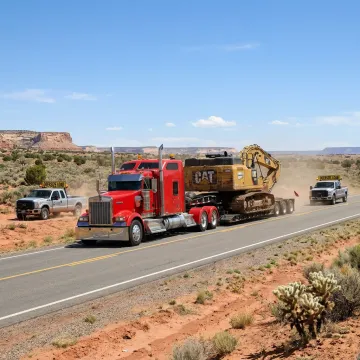
New Mexico generally follows the federal 80,000-pound gross vehicle weight limit for standard commercial vehicles on interstate highways, with axle and bridge formula limits also applying. Heavy equipment that exceeds legal size or weight typically requires oversize or overweight permits, route review, and sometimes escorts. Little John Transportation Services coordinates permitting and route engineering for qualified heavy-haul moves.
What types of heavy equipment can you transport?
Heavy equipment transport can include construction machinery, mining equipment, oilfield components, power generation equipment, industrial machinery, data infrastructure components, and oversized project cargo. Little John Transportation Services supports flatbed, step-deck, RGN, lowboy, stretch, multi-axle, double-drop, and custom trailer configurations to match the load’s dimensions, weight, center of gravity, and route requirements.
Do oversized loads need permits in New Mexico?
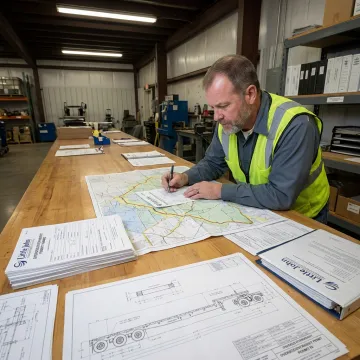
Permit needs depend on the load’s height, width, length, weight, axle configuration, and planned route. In New Mexico, oversize and overweight freight often requires state permits, designated routing, travel-time restrictions, and escort review. Little John Transportation Services handles full-cycle support, including permitting, route engineering, pilot cars, and compliance documentation for complex heavy-haul shipments.
How do you choose the right trailer for heavy equipment?
The right trailer depends on your equipment’s weight, dimensions, loading method, and clearance requirements. Flatbeds and step-decks work for many machinery loads, while RGN, lowboy, double-drop, stretch, and multi-axle trailers are used for taller, heavier, or non-drive-on equipment. Our team evaluates the freight first, then matches it with appropriate specialized capacity.
Can I track my heavy equipment shipment?
Yes. Little John Transportation Services provides tracking and tracing support for heavy-haul and project cargo, with a single point of contact overseeing coordination. For complex moves, dispatch teams monitor milestones, exceptions, permits, escorts, and delivery requirements so shippers have clear visibility from pickup through final placement at the job site or facility.
How much does heavy equipment transport cost?
Pricing is based on equipment dimensions, weight, trailer type, origin and destination, permits, escorts, route complexity, timing, and any special handling requirements. Remote New Mexico pickup points, restricted routes, or superload requirements can affect cost. Providing accurate specs, photos, and loading details helps the team build a practical and compliant quote.
Do you offer expedited heavy equipment transport?
Yes. Little John Transportation Services supports expedited and hot shot freight for urgent project parts, construction needs, oilfield service, power generation components, and same-day machinery moves. Depending on the load, available equipment can include hot-shot trucks, gooseneck trailers, expedited flatbeds, step-decks, and direct-haul options with real-time tracking.
Where do you provide heavy equipment transport service?
Little John Transportation Services supports freight across the United States, México, and Canada, including U.S.–México cross-border lanes. For New Mexico shippers near major regional corridors or border-connected routes, the company can coordinate specialized heavy-haul, hazmat, cross-border, and project cargo solutions with bilingual operations and compliance-focused documentation.